
Last updated:
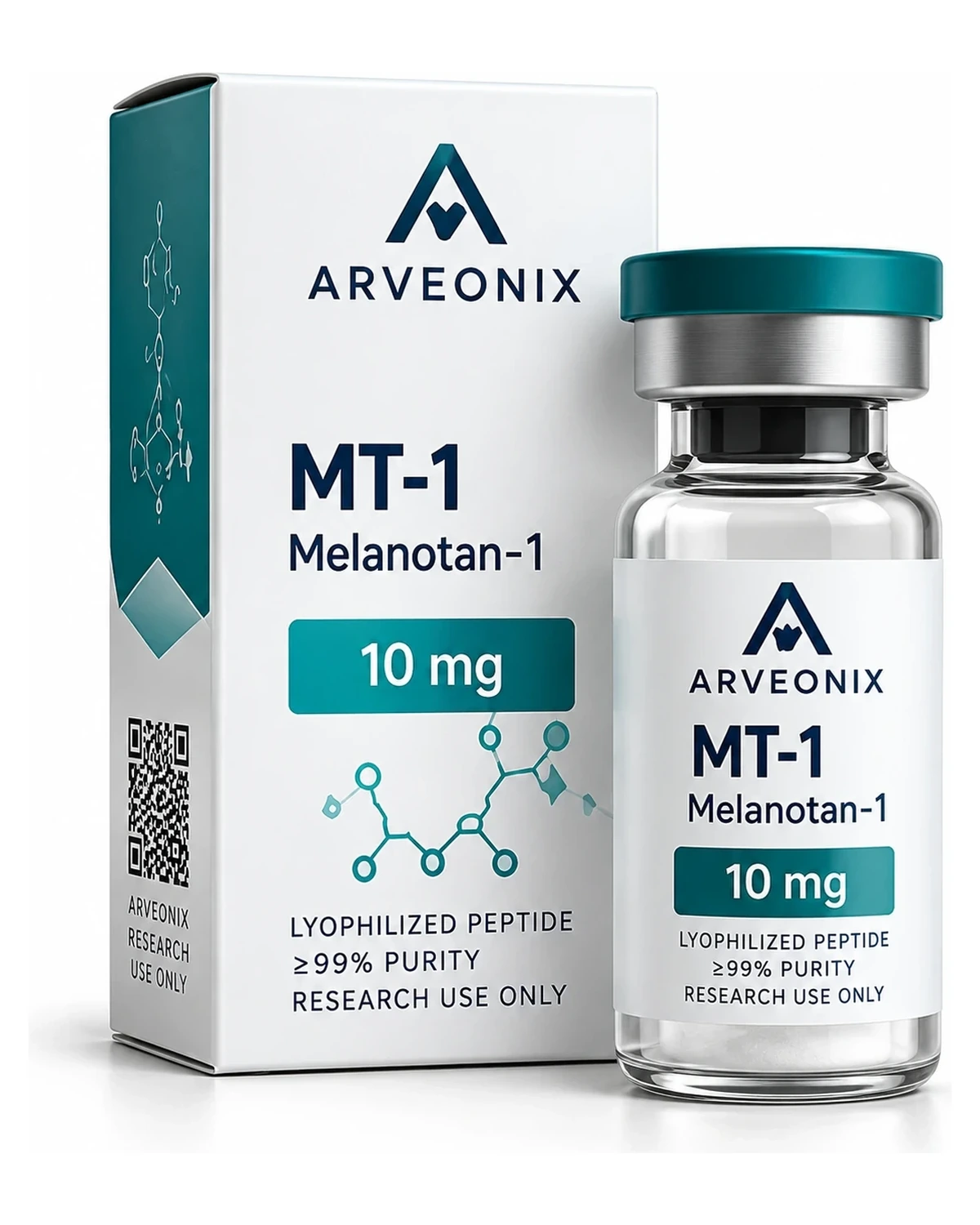
MT-1 (Melanotan-1) 10mg
MT-1, commonly referred to as Melanotan-1, is a synthetic melanocortin analogue related to alpha-melanocyte-stimulating hormone (α-MSH). It is primarily studied for its interaction with the melanocortin-1 receptor (MC1R), a receptor involved in melanocyte signalling and the biological regulation of melanin production. Research has examined MT-1 in areas including melanogenesis, pigmentation biology, melanocortin signalling and photobiology.
What is MT-1 (Melanotan-1)?
MT-1 is a synthetic peptide derived from the melanocortin signalling system. It is commonly described in research literature as an analogue of α-MSH, a naturally occurring peptide involved in signalling through melanocortin receptors. Among those receptors, MT-1 is most closely associated with MC1R, which is expressed prominently in melanocytes and plays an important role in the regulation of melanin synthesis.
The term Melanotan-1 is widely used in peptide research, while the related term afamelanotide appears in scientific and pharmaceutical literature. Although the terminology overlaps historically, researchers should distinguish between a general research product and any regulated or clinically formulated medicine. Product identity, formulation, purity and legal status should always be considered separately.
Compared with melanocortin analogues that have broader receptor activity, MT-1 is generally characterised by a stronger association with MC1R. That receptor selectivity is one reason the peptide is studied in laboratory work involving melanocyte biology, pigmentation pathways and photobiological responses.
MC1R and melanocortin signalling, with emphasis on melanocyte activity and melanin-related biological processes.
MT-1, Melanotan-1, α-MSH analogue and, in related scientific literature, afamelanotide.
Melanogenesis, pigmentation biology, receptor pharmacology, melanocyte signalling and photobiology.
10mg research product, SKU MT1, with current listed pricing shown above.
MT-1 and melanocortin signalling.
Melanocortins are signalling peptides derived from proopiomelanocortin-related pathways and interact with a family of melanocortin receptors. MC1R is particularly important in melanocyte biology. When MC1R signalling is activated, intracellular pathways can influence the production and distribution of melanin pigments.
Research involving MT-1 therefore often focuses on receptor-mediated signalling rather than simply describing a visible biological outcome. Depending on the model, investigators may examine receptor binding, downstream signalling, melanogenic activity, pigment-related cellular responses or interactions with ultraviolet-associated biological pathways.
Results from these studies depend heavily on experimental model, concentration, formulation, exposure conditions and the endpoints being measured. Findings from cell or animal research should not automatically be treated as equivalent to established outcomes in humans.
Common areas of MT-1 research.
Research may examine signalling involved in the production of melanin within melanocytes and the regulation of melanogenic pathways.
Laboratory studies may investigate how melanocortin receptor signalling influences pigment-related cellular processes.
MT-1 is useful in research focused on melanocortin-1 receptor activity, receptor selectivity and downstream signalling.
Some research explores relationships between melanocortin signalling, melanocyte biology and biological responses associated with light or ultraviolet exposure.
MT-1 vs MT-2.
MT-1 and MT-2 are both synthetic melanocortin analogues, but they are generally discussed differently in receptor research. MT-1 is more closely associated with MC1R-focused investigation, while MT-2 is commonly described as having broader activity across multiple melanocortin receptor subtypes.
| Feature | MT-1 | MT-2 |
|---|---|---|
| Common name | Melanotan-1 | Melanotan-2 |
| Peptide class | α-MSH analogue | α-MSH analogue |
| Research receptor profile | More strongly associated with MC1R-focused research | Broader melanocortin receptor activity |
| Common research themes | Melanogenesis, pigmentation biology, photobiology | Broader melanocortin signalling and receptor pharmacology |
| ARVEONIX strength | 10mg | 10mg |
You can also view the ARVEONIX MT-2 (Melanotan-2) 10mg product page →
Research considerations.
Peptide research should be interpreted within the limits of the experimental system being used. Receptor behaviour observed in isolated cells can differ from responses in tissues or whole-organism models, and published findings can vary according to assay design, exposure duration and analytical method.
For this reason, ARVEONIX product pages describe research context rather than presenting laboratory findings as guaranteed outcomes. References to pathways such as MC1R signalling, melanogenesis or pigmentation biology describe areas of scientific investigation and are not intended as treatment, dosing or individual-use recommendations.
Use the ARVEONIX calculator for straightforward concentration, volume and U-100 arithmetic.
MT-1 FAQs.
What is MT-1?
MT-1 is a synthetic melanocortin peptide analogue related to α-MSH. It is commonly studied for its interaction with the melanocortin-1 receptor and its role in melanocyte and pigmentation-related research.
Is MT-1 the same as Melanotan-1?
Melanotan-1 is the common research name used for MT-1. Related scientific literature may also use the term afamelanotide, although regulated pharmaceutical formulations should not automatically be treated as interchangeable with research products.
What receptor does MT-1 interact with?
MT-1 is primarily associated with MC1R, the melanocortin-1 receptor, which has an established role in melanocyte signalling and melanin-related biology.
What is MC1R?
MC1R is one of the melanocortin receptors. It is expressed prominently in melanocytes and participates in intracellular signalling pathways associated with melanin production and pigmentation biology.
What is the difference between MT-1 and MT-2?
Both are melanocortin analogues, but MT-1 is generally associated more strongly with MC1R-focused research, while MT-2 is commonly discussed as having activity across a broader range of melanocortin receptors.
What strength is ARVEONIX MT-1?
The ARVEONIX catalogue product on this page is listed as MT-1 (Melanotan-1) 10mg under SKU MT1.
What areas of research involve MT-1?
Research themes include melanocortin receptor signalling, melanogenesis, melanocyte biology, pigmentation-related pathways and photobiology.
Does this page provide a dosing recommendation?
No. This page provides product information and research context only. It does not recommend a dose, frequency, route of administration or individual use.
Where can I calculate concentration?
The ARVEONIX peptide reconstitution calculator can be used for arithmetic involving vial strength, liquid volume, concentration and volume conversion.
Related products.
Other ARVEONIX catalogue items you may want to view.
Need concentration or U-100 unit conversions?
Use the ARVEONIX peptide reconstitution calculator to convert vial amount, diluent volume, target dose and syringe units for research planning.