
Last updated:
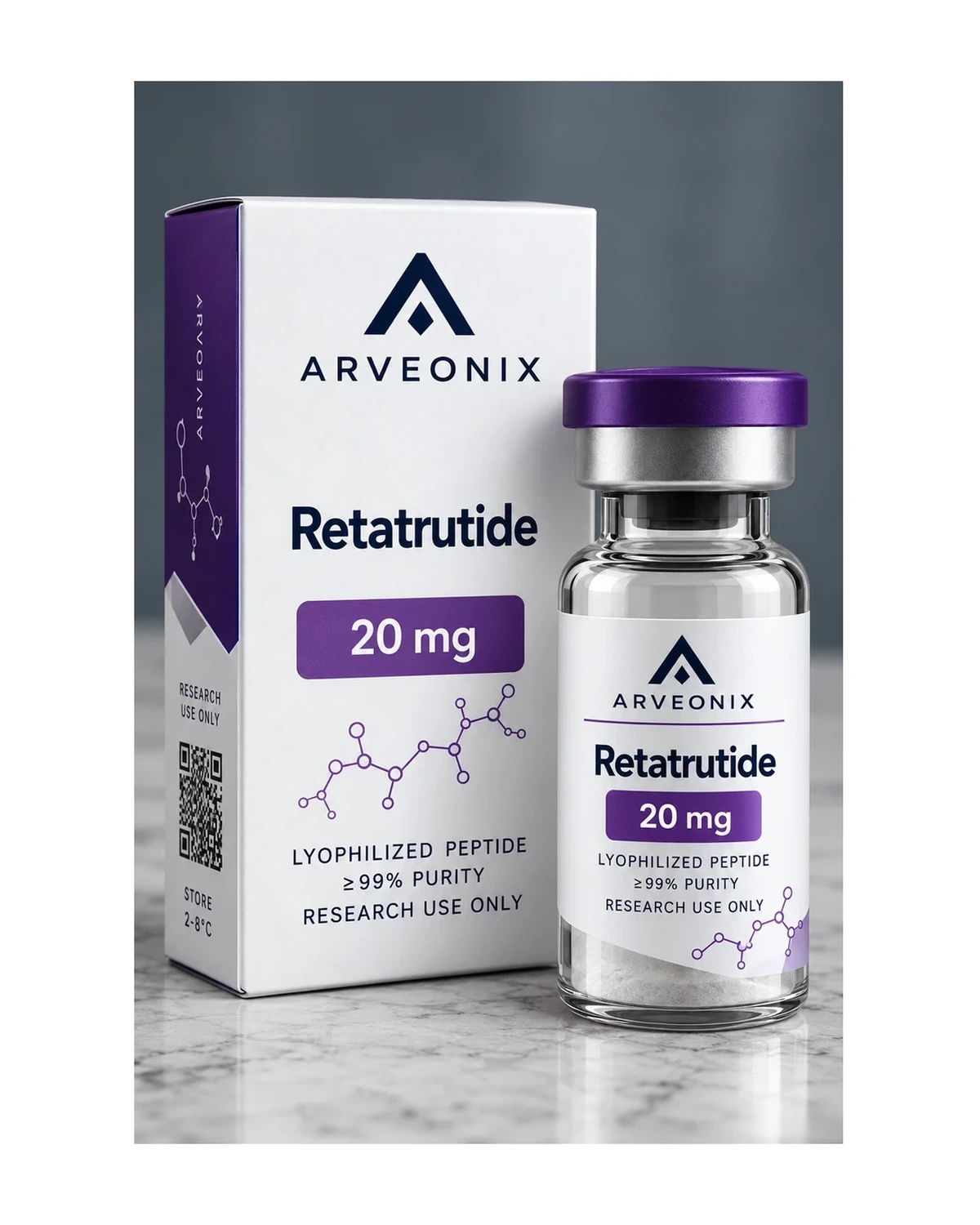
Retatrutide 20mg
Retatrutide is an investigational triple agonist studied for combined GLP-1, GIP and glucagon receptor signalling in metabolic research.
What is Retatrutide?
Retatrutide is an investigational peptide designed to activate three metabolic receptor pathways: the glucagon-like peptide-1 receptor (GLP-1R), glucose-dependent insulinotropic polypeptide receptor (GIPR) and glucagon receptor (GCGR). This triple-agonist profile distinguishes it from single- and dual-receptor incretin compounds.
Research focuses on how simultaneous engagement of these pathways affects metabolic signalling, energy balance and endocrine responses. Because retatrutide remains investigational, research findings should be described in the context of the specific studies in which they were observed.
Metabolic research
Retatrutide 20mg · SKU RT20
Triple incretin and glucagon-receptor signalling
In stock · $130.00 AUD
Triple incretin and glucagon-receptor signalling.
GLP-1R, GIPR and GCGR each participate in metabolic and endocrine signalling. Retatrutide combines activity at all three receptors within a single investigational molecule.
Researchers study receptor balance, downstream metabolic markers and how triple agonism differs from dual or single receptor approaches. Outcomes can vary by dose, population and study design, so individual findings should not be generalised beyond their evidence base.
Common research themes.
Study of incretin-related receptor signalling.
Research into complementary incretin pathways.
Investigation of glucagon-receptor contributions to metabolic signalling.
Comparison of triple agonism with single- and dual-receptor approaches.
How Retatrutide, Tirzepatide, Semaglutide and Liraglutide differ.
These molecules are often grouped together because they all involve GLP-1 receptor signalling, but their receptor profiles are not the same. The main pharmacological distinction is whether the molecule targets GLP-1 alone or combines GLP-1 activity with additional metabolic receptor pathways.
The comparison below describes receptor targets and development status rather than ranking efficacy, safety or suitability. Approved branded medicines and ARVEONIX research catalogue products should not be treated as interchangeable formulations.
| Molecule | Receptor targets | Agonist profile | Current research / regulatory context |
|---|---|---|---|
| Liraglutide | GLP-1 receptor | Single GLP-1 receptor agonist | Established GLP-1 medicine with approved therapeutic formulations. |
| Semaglutide | GLP-1 receptor | Single GLP-1 receptor agonist | Established GLP-1 medicine with approved therapeutic formulations. |
| Tirzepatide | GIP + GLP-1 receptors | Dual incretin receptor agonist | Approved dual GIP/GLP-1 therapeutic molecule in regulated formulations. |
| Retatrutide | GIP + GLP-1 + glucagon receptors | Triple receptor agonist | Investigational molecule in Phase 3 development; not yet approved for public therapeutic use. |
In simplified terms, the progression is from single-receptor GLP-1 agonism with liraglutide and semaglutide, to dual GIP/GLP-1 agonism with Tirzepatide, and then to triple GIP/GLP-1/glucagon agonism with Retatrutide. More receptor targets do not, by themselves, establish that one compound is superior to another.
Research considerations.
Research findings should always be interpreted within the experimental system in which they were produced. Cell, receptor, tissue, animal and human studies can answer different questions, and results from one model should not automatically be treated as established outcomes in another.
ARVEONIX product pages therefore focus on molecule identity, pathway biology and published research themes rather than presenting experimental observations as guaranteed effects. The information here is not a dosing, treatment or individual-use recommendation.
Use the ARVEONIX calculator for concentration, liquid-volume and U-100 arithmetic using values you enter.
Retatrutide FAQs.
What is Retatrutide?
Retatrutide is an investigational peptide agonist designed to activate GLP-1, GIP and glucagon receptors.
Why is Retatrutide called a triple agonist?
It is designed to engage three receptor systems: GLP-1R, GIPR and GCGR.
How is Retatrutide different from Tirzepatide?
Tirzepatide is a dual GIP/GLP-1 receptor agonist, while Retatrutide additionally targets the glucagon receptor.
Is Retatrutide investigational?
Yes. It is widely described in the scientific literature as an investigational compound.
What research areas involve Retatrutide?
Research focuses on metabolic signalling, incretin biology, energy balance and multi-receptor agonism.
What strength is this ARVEONIX product?
This page lists Retatrutide 20mg under SKU RT20.
Does this page provide treatment advice?
No. It provides research and catalogue information only.
Related products.
Other ARVEONIX catalogue items you may want to view.
Need concentration or U-100 unit conversions?
Use the ARVEONIX peptide reconstitution calculator to convert vial amount, diluent volume, target dose and syringe units for research planning.